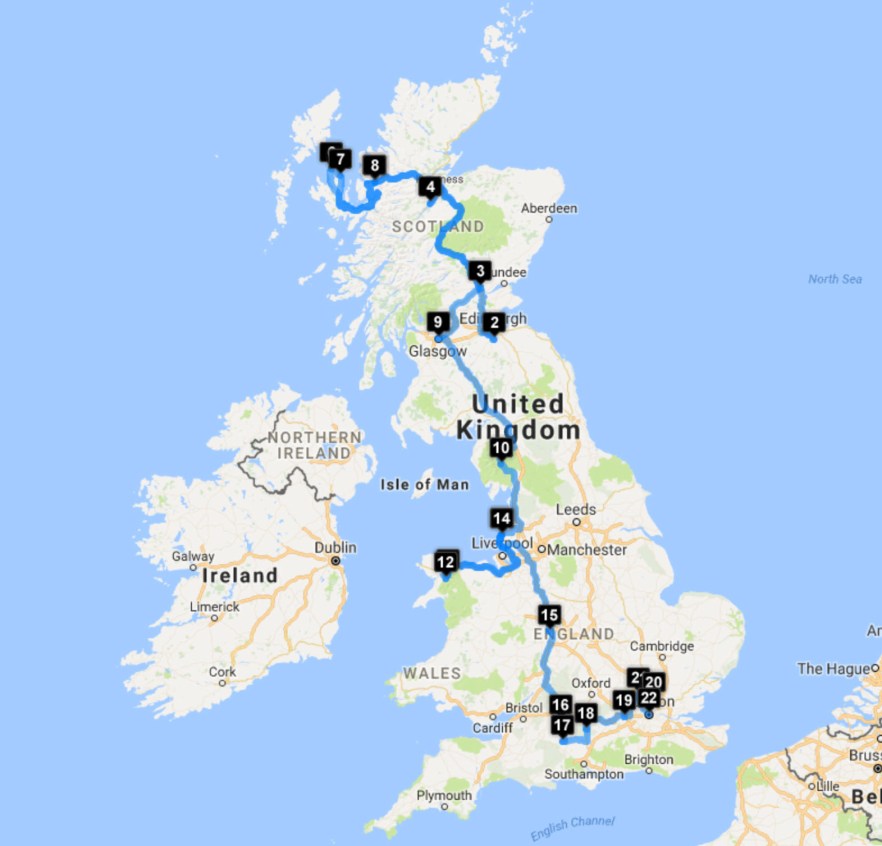
Length: 19 days (6 days in Scotland, 2 in Wales, 11 in England)
Tour Company: Over the Horizon
Tour: UK Self Guided
Traveler: Dave
Places visited:
1 – Edinburgh, UK (See UK – Scotland – August 2017)
2 – Rosslyn Chapel, UK (See UK – Scotland – August 2017)
3 – Scone Palace, UK (See UK – Scotland – August 2017)
4 – Loch Ness, UK (See UK – Scotland – August 2017)
5 – Torridon, UK (See UK – Scotland – August 2017)
6 – Duntulm Castle, UK (See UK – Scotland – August 2017)
7 – Kilt Rock and Mealt Falls Viewpoint, UK (See UK – Scotland – August 2017)
8 – Torridon, UK (See UK – Scotland – August 2017)
9 – Glasgow, UK (See UK – Scotland – August 2017)
10 – Lake District National Park, UK
11 – Southport, UK
12 – Dinorwig, UK (See UK – Wales – August 2017)
13 – Zip World Penrhyn Quarry, UK (See UK – Wales – August 2017)
14 – Southport, UK
15 – Dudley, UK
16 – Avebury, UK
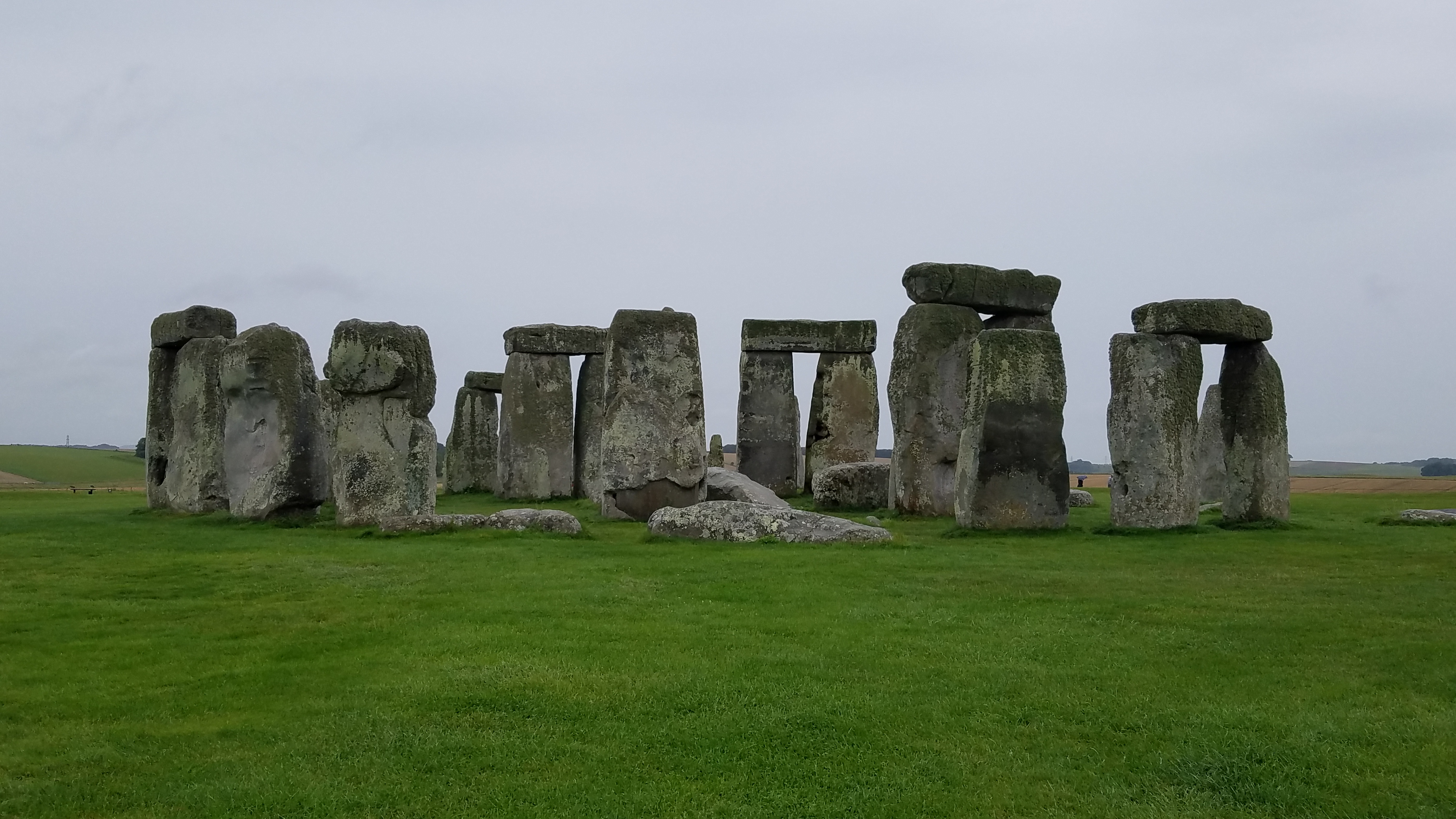
17 – Stonehenge, UK
18 – Highclere Castle, UK
19 – Windsor, UK
20 – Cheshunt, UK
21 – St. Albans, UK
22 – London, UK
I used Booking.com for all my overnight hostel stays in England.
The last part of my trip around the United Kingdom takes me through England. Leaving Glasgow, I drove 140 mi (225 km) South to Grasmere, located in Lake District National Park.
Lake District National Park
I checked in to the YHA Grasmere Butharlyp Howe which is part of the YHA (Youth Hostel Association) England & Wales and part of Hostelling International. The hostel is a converted 80 bed Victorian mansion in the very center of the park with spectacular views of the Rothay Valley and surrounding area. With plenty of lounge areas, there are lots of places to explore, chill out with family and friends or catch up on shows on the widescreen TV. Guests have use of two lounges which can be opened up or kept separate. There is also a spacious dining room with tables and chairs and a self-catered kitchen in the lower building. There is room for 12 people in a secluded corner at the front of the hostel. Camping guests are welcome to use the hostel facilities including the self-catering kitchen and toilets and showers. There is free WiFi in public areas, free parking on site, and the front desk sells candy and drinks.
I stayed in an 8 bed dorm room and there are shared bathroom facilities down the hall (multiple individual bathrooms and 3 shower rooms). The hostel was very affordable at £15.00 ($19.50) per night for such a popular destination and last-minute booking. I highly recommend staying here if you’re looking for a great, affordable, central location for your Lake District adventures.
Unfortunately for me, the rain was heavy and non-stop for the entire time I was in Lake District, so I was not able to get out and explore the area that I’ve been told is quite amazing in the summer. I did, however, get to work on some of these blogs that I was way behind on, so it wasn’t a total waste of time.
Southport
2 hours South of Grasmere is Southport where I stopped to visit some travel family (Neil, who I met in Peru, and Dan, who I met in Costa Rica) for a few (OK, maybe a bit more than a few) days (THANKS NEIL!). While most of these days were spent relaxing, we did manage to get out to a few places.
Thatch & Thistle: The Thatch & Thistle Pub is a popular pub offering good food and beer. There are plenty of facilities ranging from bar, indoor, and outside seating. There are also darts boards, regular quiz nights, and live sports. Pints of beer were quite affordable at around £3.50 ($4.55) for Guinness. The staff is really friendly and fun as well.
High Park Fish & Chips: High Park Fish & Chips is a local chippy and Chinese take-away. A rather interesting combination of dishes, but they serve mainly Chinese dishes and have fish and chips, and traditional pies. I got the fish and a large order of chips with salt and malt vinegar. It was a huge portion and only cost £5.60 ($7.25) and was really good.
Holmes-Smith Quality Butchers: We decided to have a BBQ and headed over to Holmes-Smith, a small, family-run, quality butcher, to get some steaks, sausages, and chicken. They had a great selection of meats and we walked out of there with 3 great steaks, 3 boneless/skinless chicken breasts, and 3 sausages for around £16.00 ($20.80).
Formby Beach: Formby Beach is a large, soft-sand beach located about 20 minutes South of Southport and has some of the largest sand dunes in the UK. Formby offers visitors a remarkable expanse of beach with sand dunes rising from the shore a specially protected pine forest where the dunes meet the trees. It is an important habitat for waders and provides a woodland home for the red squirrel. Tawny owls and Barn Owls, rabbits, stoats, weasels, voles, sand lizards and even the rare natterjack toad have been identified as living in the area. Active erosion in the area combined with the tides has periodically revealed prehistoric mud layers, some of which still show signs of animal and even human footprints. The beach is in the care of the National Trust. From the top of the highest dunes (and on a clear day) it is possible to see far out over the Irish Sea. Key landmarks that can also be spotted include Snowdonia and Anglesey in Wales, Blackpool Tower, the mountains of Cumbria and Black Coombe in the Lake District.
This exceptional destination can get busy on warm sunny days and nearby parking is limited. There are mobility car parking spaces in both the nearby woodlands and main car park. The beach can only be reached by sand paths over the dunes.
After a few days in Southport, the journey continues into Wales, which you can read about here:
After Wales, I returned to Southport for a few more days before heading to Southern England for the rest of my trip. Thanks Neil and Dan for a great time in Southport!
Dudley
On my way to Avebury, I had to stop in the town of Dudley. This is not a normal stop for most people, but because I am from Dudley, MA, in the U.S., I had to visit the town where my hometown got its name. Dudley is a large town in the West Midlands, about 10.5 miles (16.9 km) north-west of Birmingham. Originally a market town, Dudley was one of the birthplaces of the Industrial Revolution and was sometimes called the capital of the Black Country. It was called the Black Country because it was one of the most industrialized parts of Britain with coal mines, coking, iron foundries, glass factories, brickworks, and steel mills producing a high level of air pollution.
Dudley grew into an industrial center in the 19th century with its iron, coal, and limestone industries before their decline and the relocation of its commercial center in the 1980s. Tourist attractions include Dudley Zoo and Castle, 12th century priory ruins, and the Black Country Living Museum.
I took a picture of the castle, but apparently it didn’t save, because when I went to upload it to the web, it wasn’t on my phone, so here’s a picture of it from Tony Hisgett (https://www.flickr.com/photos/hisgett/5511621979/) in its original format.
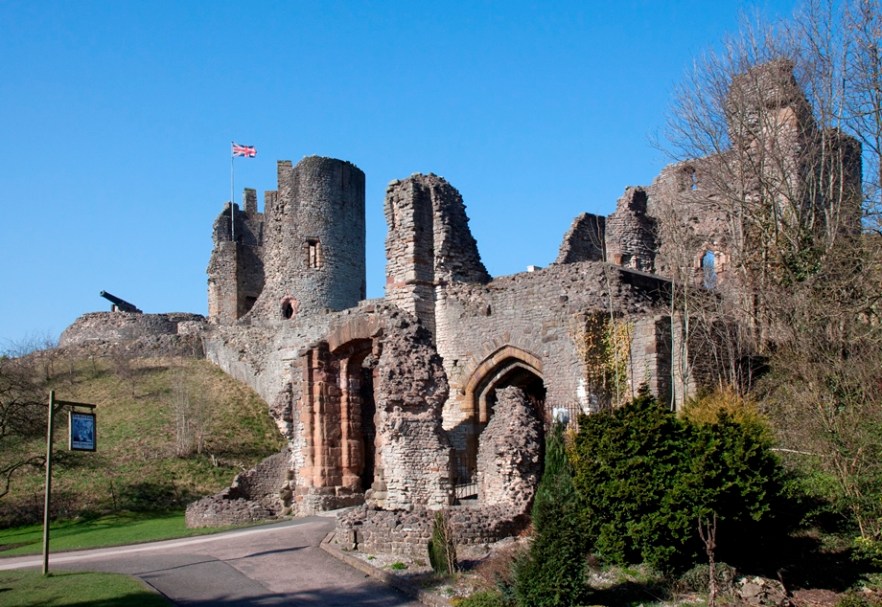
Dudley Castle – Taken by: Tony Hisgett (https://www.flickr.com/photos/hisgett/5511621979/)
Avebury
Avebury is part of an impressive group of Neolithic and Bronze Age ceremonial sites across the area. They include West Kennet Avenue, West Kennet Long Barrow, The Sanctuary, Windmill Hill, and Silbury Hill. Many of these sites can be reached on foot from the village. The Alexander Keiller Museum also displays many notable finds from the Avebury monuments. Together with Stonehenge, Avebury and its surroundings are one large UNESCO World Heritage Site.
The Avebury complex is one of the principal ceremonial sites of Neolithic Britain that can be visited today. It was built and changed over many centuries from about 2850 BC through 2200 BC and is one of the largest of Britain’s surviving Neolithic henge monuments. The exact sequence of construction of the banks, ditches, and stone circles at Avebury is still not certain.
Limited excavations and more recent aerial and geophysical surveys indicate that many other features once existed within the enclosure. It is quite likely that, before the stone circles were erected, timber circles and structures may have originally filled the area within the bank and ditch, like other henges in this area. Two avenues of stones were also built, linking the Great Henge with other ceremonial sites at Beckhampton and Overton Hill. The huge mound of Silbury Hill stands not far away and is also broadly contemporary with these monuments.
Avebury is a must visit. Parking during the day is available at the National Trust Car Park, which has a charge and hours of operation, or you can park along the road in any number of turnouts. I actually parked along the road at the entrance of the Car Park because the Car Park was going to be closed (it has a gate) 30 minutes after I arrived and I didn’t want to be stuck in there. The gate was still open well after closing though when I left, but not sure if that is normal or not.
Entry to the site is free. You can walk all along the sites, but be sure to keep gates closed and try not to disturb the sheep or cows roaming the fields.
For more pictures, check out my album on Facebook.
After Avebury, I drove to the Cholderton (Stonehenge) Youth Hostel. The hostel is 8 mi (12.9 km) East of the Stonehenge visitor’s center so it was very convenient to get to Stonehenge early in the morning. Cholderton is also part of the YHA (Youth Hostel Association) of England and Wales and part of Hostelling International. I had a bed in an 8 bed dorm, with shared bathroom in the dorm room. 6 of the beds (3 sets of bunks) were in the main room, and there was a small side room with a door that had another set of bunk for a private room. There were only 3 people in the main room and 1 in the private little room, so there was plenty of room and it was quiet. The hostel offers accommodation from £18.00 ($23.40) per person/per night (I paid £20.00/$26.00), is close to Stonehenge and Salisbury, private en-suite rooms are available, bed linen is provided, free Wi-Fi in the common areas, catering available, laundry facilities, and free parking. If visiting Stonehenge and you want an affordable place to stay close by, this is your place.
Stonehenge
Stonehenge is a prehistoric monument in Wiltshire, 2 mi (3 km) West of Amesbury. It consists of a ring of standing stones, with each standing stone around 13 ft (4.0 m) high, 7 ft (2.1 m) wide, and weighing around 25 tons (22.68 tonnes). The stones are set within earthworks in the middle of the most dense complex of Neolithic and Bronze Age monuments in England, including several hundred burial mounds.
One of the most famous landmarks in the UK, Stonehenge is regarded as a British cultural icon. It has been a legally protected Scheduled Ancient Monument since 1882 when legislation to protect historic monuments was first successfully introduced in Britain. The site and its surroundings were added to UNESCO’s list of World Heritage Sites in 1986. Stonehenge is owned by the Crown and managed by English Heritage and the surrounding land is owned by the National Trust.
Archaeologists believe it was constructed from 3000 BC to 2000 BC. Stonehenge could have been a burial ground from its earliest beginnings. Deposits containing human bone date from as early as 3000 BC. The surrounding circular earth bank and ditch, which constitute the earliest phase of the monument, have been dated to about 3100 BC. Radiocarbon dating suggests that the first bluestones were raised between 2400 and 2200 BC, although they may have been at the site as early as 3000 BC.
Within the bank and ditch were possibly some timber structures and just inside the bank were 56 pits, known as the Aubrey Holes. There has been much debate about what stood in these holes. The consensus for many years has been that they held upright timber posts, but recently the idea has re-emerged that some of them may have held stones. Within and around the Aubrey Holes, and also in the ditch, people buried cremations. About 64 cremations have been found, and perhaps as many as 150 individuals were originally buried at Stonehenge, making it the largest late Neolithic cemetery in the British Isles.
In about 2500 BC the stones were set up in the center of the monument. Two types of stone are used at Stonehenge, the larger sarsens and the smaller bluestones. The sarsens were erected in two concentric arrangements, an inner horseshoe and an outer circle, and the bluestones were set up between them in a double arc. Probably at the same time that the stones were being set up in the center of the monument, the sarsens close to the entrance were raised, together with the four Station Stones on the periphery.
About 200 or 300 years later, the central bluestones were rearranged to form a circle and inner oval, which was again later altered to form a horseshoe. The earthwork Avenue was also built at this time, connecting Stonehenge with the river Avon.
One of the last prehistoric activities at Stonehenge was the digging around the stone settings of two rings of concentric pits, the so-called Y and Z holes, radiocarbon dated by antlers within them to between 1800 and 1500 BC. They may have been intended for a rearrangement of the stones that was never completed.
Northeast of Stonehenge is Woodhenge, the Cuckoo Stone, and the Durrington Walls. Getting there from Stonehenge was a bit of an adventure through the garrison town of Larkhill, home of the Royal School of Artillery. Watch for artillery being fired and tanks crossing, they have the right of way.
After all the times I have been to England, I finally made it to Stonehenge. I’ve been wanting to see this site for years. The only access to the site is through the Visitor’s Center, where there is a large parking lot. Shuttle buses take you from the center to Stonehenge and back.
Entry to the site was £16.50 ($21.45) pre-booked online, without Gift Aid. Walk-up fee, without Gift Aid, was £17.50 ($22.75), plus you had to wait in a longer line. Gift Aid is a voluntary 10% donation.
For more pictures, check out my album on Facebook.
Highclere Castle
Highclere Castle, built in 1679, is a beautiful building and a warm and welcoming home. It is currently the home of the Earl and Countess of Carnarvon and is only open for between 60 and 70 days a year, mainly July and August. They also create special tours, charity events, concerts, and country fairs throughout the year in the park.
You can explore the history of the Castle, the Egyptian Exhibition narrating the discovery of the Tomb of Tutankhamen, and the peace and tranquility of the surrounding gardens and grounds. The castle became home to Egyptian artifacts after the 5th Earl of Carnarvon, an enthusiastic amateur Egyptologist, sponsored the excavation of nobles’ tombs in Thebes in 1907. He later accompanied archaeologist Howard Carter during the discovery of the tomb of Tutankhamen in 1922.
Many of the rooms and views are familiar to viewers of ‘Downton Abbey’. Both the Drawing Room and Dining Room form the backdrop to the dry, withering put-downs delivered by Maggie Smith, as the Dowager Countess. The distinctive gardens and park offer enjoyment throughout the year with constant growth and change as the seasons turn.
Entry to the castle was:
Castle, Garden, and Exhibit – £23.00 ($29.90)
Castle and Garden Only – £16.00 ($20.80)
Exhibition and Garden Only – £16.00 ($20.80)
Gardens Only – £7.00 ($9.10)
For more pictures, check out my album on Facebook.
After Highclere, I drove to the YHA Jordans. The hostel is located in Jordans, 10 mi (16 km) North of Windsor. YHA Jordans is part of the YHA (Youth Hostel Association) of England and Wales and part of Hostelling International. If you want a relaxing weekend break in a rural retreat with good access to London, YHA Jordans is the Youth Hostel for you. The property is self-catering only, so bring supplies with you or plan to go out. YHA Jordans is only five miles from the London Underground so you can be in the capital in just 30 minutes. This accommodation is also handy for Legoland Windsor, Winsor Castle, Harry Potter Studios, and Heathrow Airport. The property has a full kitchen, WiFi in the common area, dorm style rooms with 4 beds (2 sets of bunks), and shared bathroom facilities in their own building. I had a bed in a 4 bed dorm, but was the only one there for the night, so that was great. Prices start at £22.00 ($28.60) per person per night, which is great for the area and the summer holiday season.
Windsor
Early the next morning, I checked out of YHA Jordans and headed for Windsor. I found a car park, River Street Car Park, close to Windsor Castle. Windsor Castle is the oldest and largest occupied castle in the world and is open to visitors all year round. William the Conqueror chose the site for Windsor Castle, high above the river Thames and on the edge of a Saxon hunting ground. He began building at Windsor around 1070, and 16 years later the Castle was complete. It has since been the home of 39 monarchs and today the Queen spends most of her private weekends at the Castle.
Also on the property is St. George’s Chapel, which is the place of worship at Windsor Castle. It is both a Royal Peculiar and the Chapel of the Order of the Garter. The Chapel is governed by the Dean and Canons of Windsor. It seats approximately 800. The castle chapel was established in the 14th century by King Edward III and began extensive enlargement in the late 15th century. It has been the location of many royal ceremonies, weddings and burials. The Chapel is located in the Lower Ward and is the planned burial site for the Queen.
Entry to the castle grounds was £20.50 ($26.65) and is self-guided. When you arrive, you will pass through an airport-style security check (metal detectors and bag x-ray machines). You can take photographs outside the Castle buildings, but not inside or within St George’s Chapel. Your ticket includes a multimedia guide.
Although the ticket is a little expensive, the castle, chapel, and the ground are beautiful and definitely worth a visit. You can spend all day on the property looking at the different area such as the State Apartments, Queen Mary’s Doll House, Semi-State Rooms, Grand Reception Room, St. George’s Chapel, and see the Changing of the Guard.
For more pictures, check out my album on Facebook.
Cheshunt
From Windsor, I drove to Cheshunt, which is North of London, to the YHA London Lee Valley. YHA London Lee Valley is part of the YHA (Youth Hostel Association) of England and Wales and part of Hostelling International. YHA London Lee Valley is a Youth Hostel split over six buildings. There are five lodges with accommodation in them and a main lodge which contains the cafe-style communal areas and conferencing facilities. The wooden lodges include en-suite 8/6/4/or 3 bed dorm rooms, small social areas, and high quality kitchenettes. The hostel is situated in the Lee Valley Regional Park, a 10,000 acre rural retreat just outside of London where you can explore open green spaces and even take part in sports like white water rafting. Just a twenty-minute train journey from central London, the hostel is within easy reach of the capital and perfect for sightseeing and city breaks. A train ticket purchased at Cheshunt station even includes your unlimited tube travel for the whole day.
I was in an 8 bed dorm and there was only 1 other person in the room, so plenty of space. Prices start at £17.00 ($22.10) per person per night. I paid £20.00 ($26.00) which is amazing for being so close to London, having a train station within 5-minutes walk, and it being the summer holiday season.
St. Albans
St Albans stands out as a unique English Cathedral City. The city’s history can be seen in the Roman remains and the medieval architecture. There are lush green parks and countryside, various attractions, and an interesting and ancient history. St. Albans is just 20 minutes from London St. Pancras Station, a short hop off the M1 and M25 motorways, within easy reach of London Luton and Heathrow airports.
I was here to visit more travel family and special thanks to Amie and Walter for spending the day with me and showing me around St. Albans. Also a special thanks to Alan and Shirin for letting me stay with them for a few nights and showing me around some less traveled parts of London.
London
London is a great city with so much history and so many things to see and do. On this trip, I got to have dinner in the city with on night with travel family (we all met in Costa Rica in November 2015), and then a Saturday in London with Alan to check out some places he likes and aren’t regular tourist areas.
After almost 2 years, the group met for dinner at Cubana, the closest we could get to Costa Rica style food in London. Cubana is located next to Waterloo Station. Their menus include traditional, slow-cooked Cuban dishes alongside tapas, Latin American specialities, and barbacoa dishes prepared on their charcoal grill. They also have plenty of vegetarian choices. Their drink menu is full of rum based drinks and some tequila based drinks as well. Thanks to Alan, Shirin, Amie, Laura, and Jamie for a great night!
The next morning, Alan and I hopped on a train in St. Albans and headed into London for the day. We walked around the financial district, saw The Shard, The Gherkin, The Scalpel, Borough Market, and went on London Bridge and had views of the Thames, the HMS Belfast, and Tower Bridge.
On the way back to St. Albans, Alan suggested we check out Camden Market. We took the Underground to the Camden Town stop and walked down Camden High St. past shops, bars, and music venues, and over the Camden Lock to the Camden Market. Open since 1974, Camden Market is a diverse community of creative sellers, street food vendors, and independent stores. There are over 1,000 places to shop, eat, drink, and dance. Camden Market is one of London’s most popular weekend tourist attractions (fourth-most popular visitor attraction in London, attracting approximately 250,000 people each week), offering fashion and crafts, and a mix of people and foods from every corner of the world. The area has been made famous by films such as Withnail & I, pop icons Madness & Oasis, and historic writers such as George Orwell, Mary Shelley, and Charles Dickens. In the 1960s, legendary gigs at Dingwalls and the Roundhouse changed London’s music scene forever, bringing rock and punk to London. These venues were beloved by counter-culture bands, including The Clash, The Sex Pistols, and Blondie.
We stopped for a drink at Lock 17, a fantastic place to unwind. Consisting of the Market bar pub & grill, Terrace, Live music venue the Dingwalls and The Comedy Loft, this venue is perfect for a night out in Camden. Lock 17 is the typical local Camden venue, a chilled out eatery by day and a high variety event space by night. It has two levels; downstairs is a small bar with more seating next to the outside terrace and additional seating and tables occupy the gallery area that overlooks the bar. The menu offers a good mix of reasonably priced sandwiches, salads, and classic pub grub. The centerpiece of this hangout is its well stocked bar. Alongside all the usual drinks that you’d expect to find, there’s a great list of locally-brewed ales, ciders, and beers.
As with most places in London, Camden Market should be on your list to visit!
For more pictures, check out my album on Facebook.
Leaving England, I flew with Norwegian Airlines out of London-Gatwick Airport. Dropping off the rental car at Gatwick was a little difficult because the signs for the rental car return center were not well positioned, especially at the North terminal. Norwegian flies out of the South terminal, which is where the rental car return center is, so that was helpful. Checking in and going through security at Gatwick was quick and easy.
I hope this gives you some inspiration to take a trip to England. For photos from the entire trip, check out all my albums on Facebook and my YouTube channel.
Please share with your friends using the links below. If you have any questions or comments, please reply using the box below.
Thanks for reading!
 Over The Horizon, LLC